PTT adapters explained
The most asked question about an M32: which adapter do I need? The answer depends not on your headset but on your radio. Here is how to know within thirty seconds.
What a PTT actually does
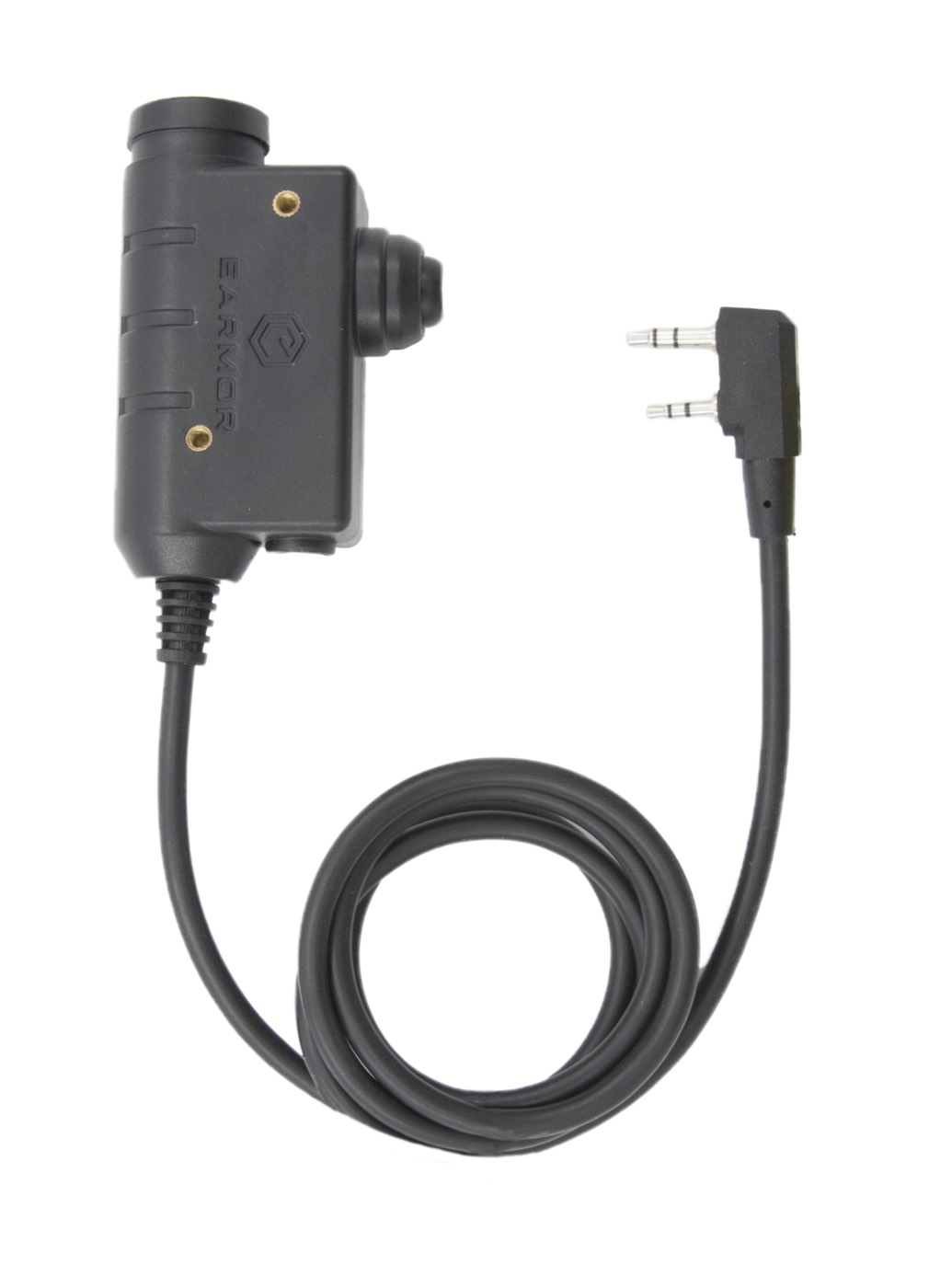
PTT stands for push to talk. It is the cable with a button that sits between your headset and your radio. Without it you do hear incoming radio traffic through the cups, but you cannot answer; your headset microphone has no path to the transmitter.
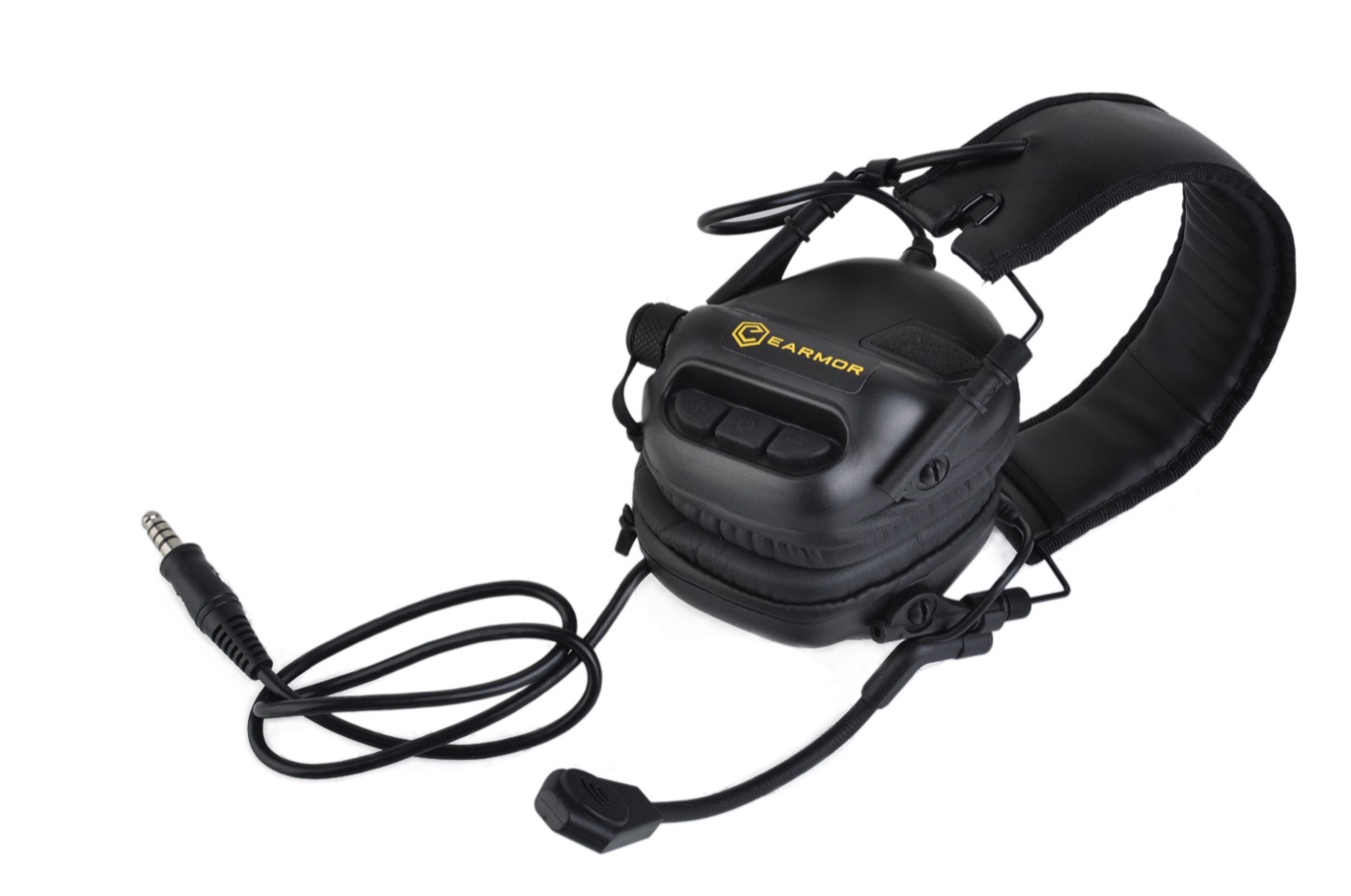
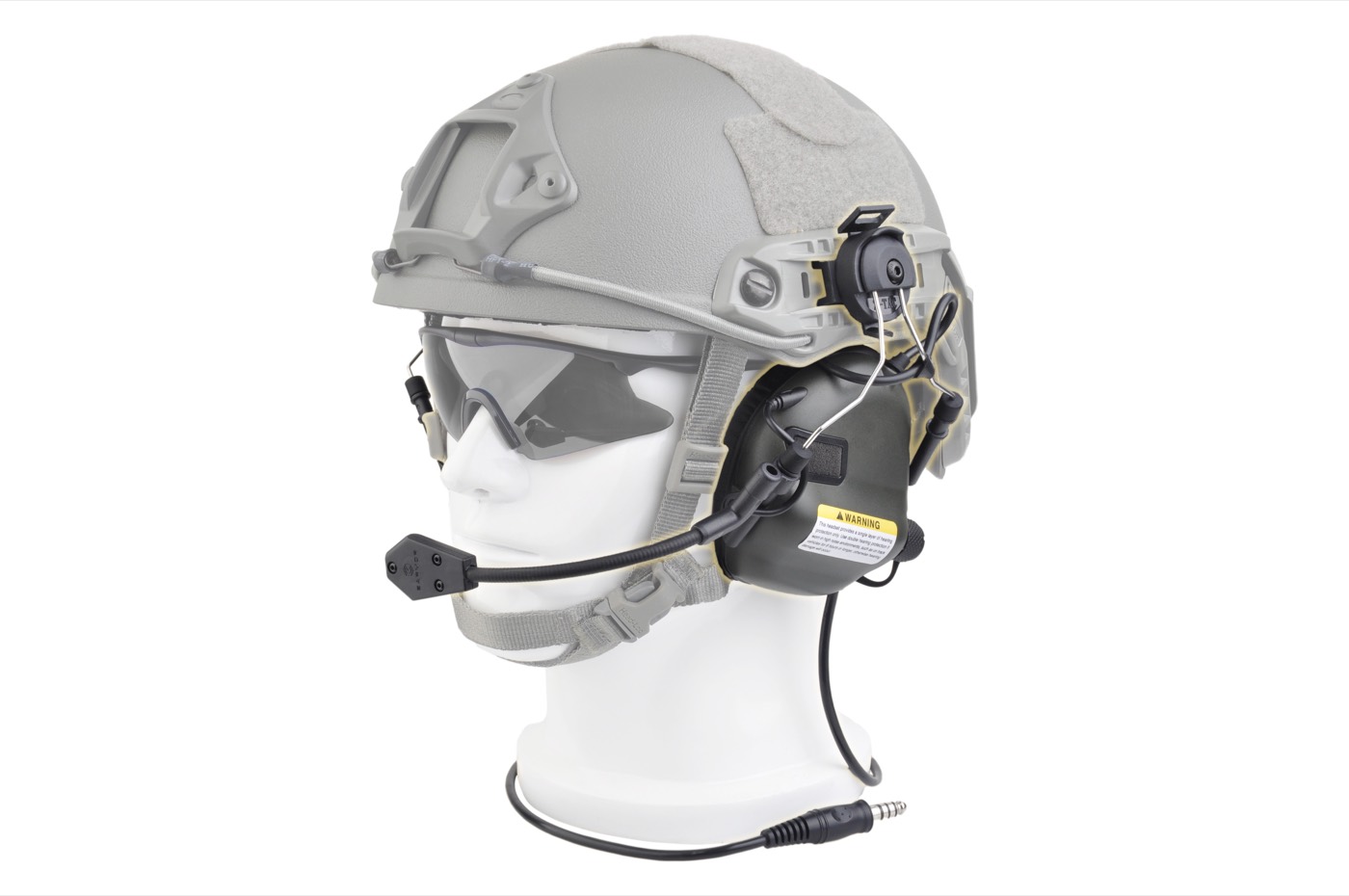
On the headset side everything is standardised: EARMOR uses the military NATO TP-120 connector, also called Mil-Std 7.0. Every EARMOR PTT fits it. On the radio side it is a mess, because every manufacturer invented its own plug.
How to tell which plug you need
Grab your radio and look at the socket on the side, usually under a rubber flap. Two separate pins side by side in different thicknesses means Kenwood two-pin. That is by far the most common type, because the affordable Baofeng, Retevis and Wouxun radios use that plug.
Motorola uses either a wider flat plug or, on the Talkabout series, a single round pin depending on the model. Midland has its own two-pin that is subtly different from Kenwood, so those two are not interchangeable. And there is a version that fits the headphone socket of a mobile phone, handy if your team communicates through an app.
What does not work
EARMOR states explicitly that Z-Tac PTTs do not work on their headsets. They sometimes fit physically, but the wiring differs, and the result is a transmitter that stays silent or hearing yourself back. Use an EARMOR adapter, or a TCI or Nexus model.
The M31 and M31H also have no microphone and no radio connector. No PTT fits them, however much you want it to. To communicate you need an M32 or M32H.
Where to mount the button
Most PTTs have a velcro loop or clip. In practice the button ends up on your sling at chest height, or on the shoulder strap of your plate carrier. What matters is that you can find it blind with your non-shooting hand, without disturbing your grip or your mount.
Route the cable so it does not run along your weapon or catch on an ejection port. A cable that tugs at your headset while you move is not just annoying, it can lift the cup just enough to break the seal.